Why Shade Cloth Shrinks After Installation & Common Causes
Shade cloth usually shrinks or tears early because poor heat setting, low-grade yarn, over-tensioning, and UV exposure change dimensions within 1 to 3 summers.
Key Takeaways
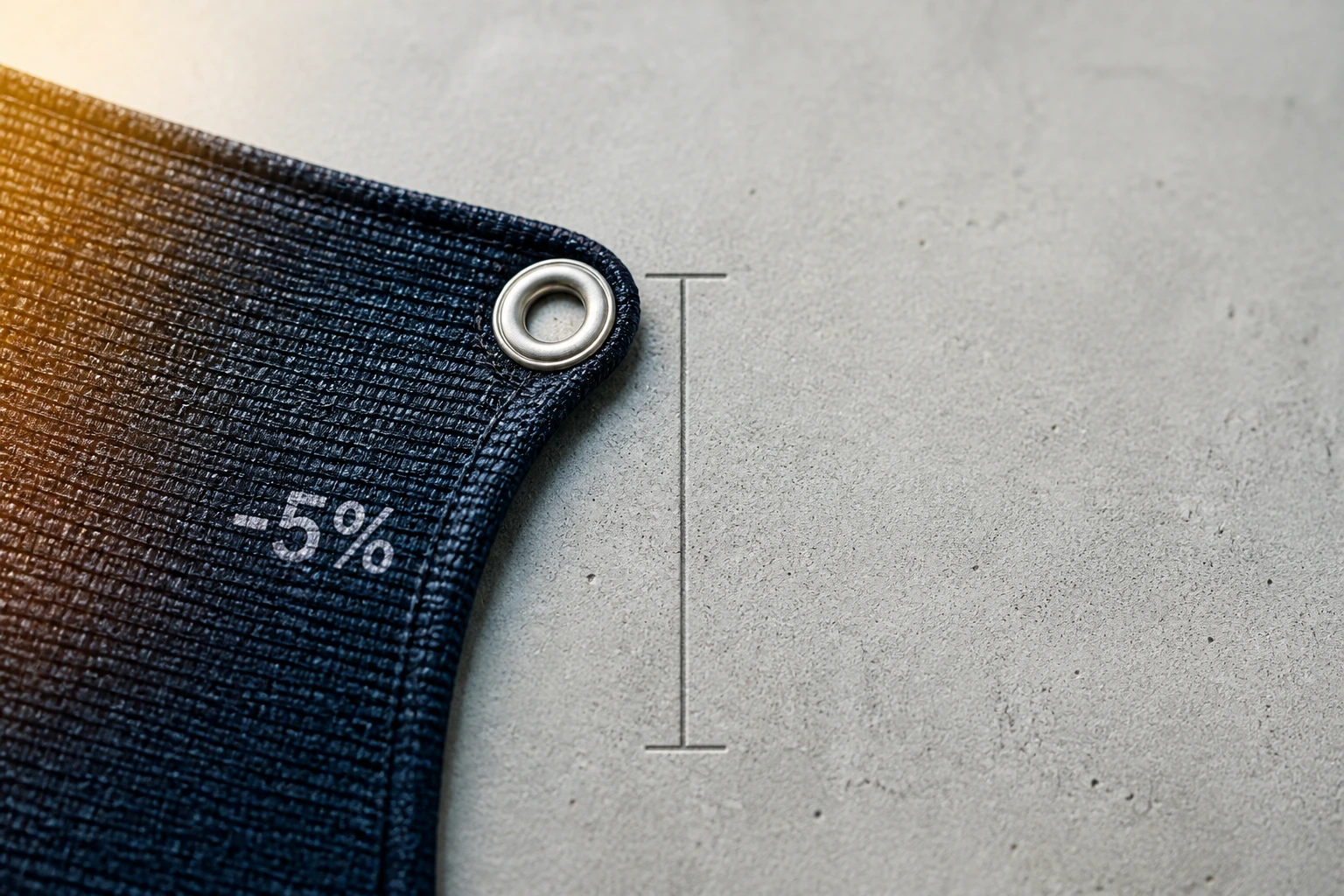
- Non-stabilized High-Density Polyethylene netting naturally shrinks by 5 to 8 percent upon initial sun exposure.
- Loose installations cause severe mechanical fabric fatigue in wind speeds under 85 miles per hour.
- Industrial heat-setting treatments using controlled temperature and appropriate line speed reduce total dimensional shrinkage to under 5 percent.
What causes shade cloth to shrink after installation?
Non-stabilized High-Density Polyethylene netting naturally contracts by 5 to 8 percent upon initial exposure to solar heat.
High-Density Polyethylene features a distinct molecular structure that reacts to thermal exposure. When non-stabilized fabrics encounter intense solar heat on a customer structure, the material undergoes immediate macromolecular rearrangement. The fabric will naturally contract by 5 to 8 percent (EyouAgro, 2026).
Manufacturers prevent this dimensional shift through industrial heat finishing. A proper stabilization process uses controlled heat-setting at the appropriate temperature and line speed (CNY Printer, 2026). Skipping this crucial manufacturing step forces the fabric to finish its setting phase after installation. This late-stage contraction places excessive tension on the mounting hardware and often rips the grommets directly out of the hem. Commercial-grade heat-set fabric reduces functional shrinkage to under 5 percent over its entire lifespan (EyouAgro, 2026).
Why do shade sails fade and tear after three years?
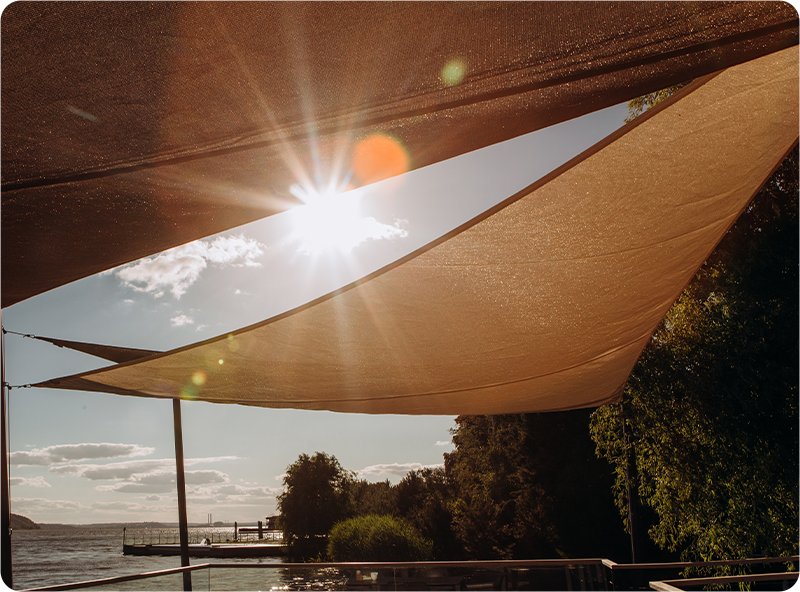
Loose installation causes fabric flutter that leads to seam tearing in wind speeds well below the 85 miles per hour rating.
Many property owners assume that fading or tearing within a few summers points to chemical failure. The root cause of a premature tear is usually mechanical fatigue. Correctly tensioned sails are rated to withstand wind speeds up to 85 miles per hour (Canvas Craft, 2026). A loose sail whips in the wind. This continuous fluttering action degrades the fiber integrity long before ultraviolet radiation can break down the plastic.
Material selection also dictates structural longevity. Monofilament strands possess physical memory that helps the material return to its original shape after stretching. Flat tape yarns lack this memory and stay permanently elongated after a strong wind event (Advanced Textiles Expo, 2026). A permanently stretched tape yarn creates a sagging canopy that catches more wind and accelerates the tearing process.
| Symptom | Primary Cause | Technical Metric |
|---|---|---|
| Post-Install Shrinkage | Lack of Heat-Setting | 5 to 8 percent natural contraction in non-stabilized netting |
| Fraying and Tearing | Flutter Effect | Loose sails failing in winds under 85 miles per hour |
| Sudden Sagging | Tape Yarn Usage | Tape yarns lack tension memory and stay elongated |
| Rapid Fading | Low UV-Stabilizer | Light colors offer lower UPF despite heat reflection |
Evaluate fabric specifications for your structure
Review technical data on wind ratings and tension memory to choose the right material.
Does shade cloth color affect UV degradation and durability?
Darker shades like black and navy absorb solar radiation directly into the fiber, which yields a higher UV Protection Factor.
Property owners frequently ask if lighter colors prevent ultraviolet damage by reflecting sunlight. Lighter colors do reflect more heat to keep the shaded area cooler, but they allow significantly more ultraviolet transmission through the mesh (Darong Tester, 2026).
Darker colors absorb the radiation within the fabric matrix. This absorption provides superior protection for the people and assets underneath the canopy (Project Shade, 2026). However, the fabric color plays a secondary role in total service life compared to polymer quality. A light-colored fabric with heavy ultraviolet stabilizers will easily outlast a poorly manufactured black fabric.
How should buyers specify HDPE shade fabric for hot, high-UV climates?
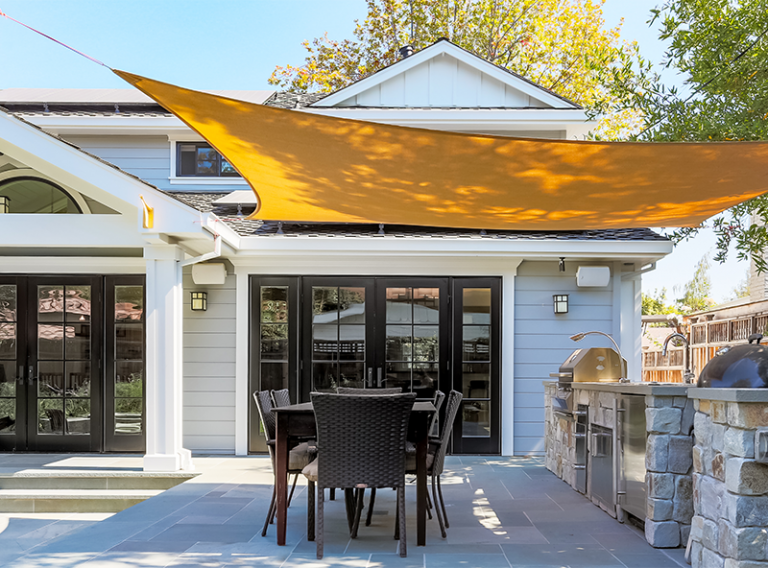
In hot, high-UV climates such as Arizona, the Middle East, Australia, and other sun‑intensive regions, buyers should evaluate HDPE shade fabric by material quality, GSM, UV stabilization, shade factor, color, warranty terms, and installation conditions.
Cooltra Shade™ standard HDPE shade fabric is made with 100 % virgin HDPE and carries a 10‑year UV‑stabilized warranty. For demanding outdoor applications, buyers should confirm the correct GSM option, roll size, color, UV block, and shade factor for the local climate and final installation environment.
Long‑term performance depends not only on the fabric itself but also on fabrication, tensioning, structural design, wind exposure, and maintenance. Genplus Corporation can provide product specifications and sample support so importers, distributors, contractors, and agricultural suppliers can choose the right Cooltra Shade™ option for their local market.
How does hardware selection impact tensioning and maintenance?
Correct tensioning dictates the survival of a shade structure during high wind events. When facility managers select inadequate mounting hardware, the sail cannot maintain the necessary rigidity to prevent the mechanical flutter effect. Because correctly tensioned sails are rated to withstand wind speeds up to 85 miles per hour, the failure point is rarely the fabric itself. Instead, the failure stems from the inability of the hardware to keep the fabric taut over time.
Loose installations result in severe whipping actions that rapidly degrade structural fibers. This flutter effect breaks down the material at the seams and corners long before ultraviolet radiation causes chemical degradation. To combat this, installers must utilize heavy-duty turnbuckles, reinforced D-rings, and rigid steel posts that allow for continuous tension adjustments as the fabric settles into its environment. Routine maintenance should include visually inspecting these mounting points and tightening the hardware to eliminate any visible sagging.
What role does tension memory play in long-term fabric health?
Tension memory refers to a material's physical ability to return to its original knitted shape after being stretched by strong winds or heavy loads. Proper heat‑setting during production—using controlled temperature and line speed—stabilizes the knitted HDPE structure and reinforces this memory, which is a critical factor in determining how often a shade structure will require maintenance or retensioning throughout its functional lifespan.
Yarn geometry acts as the primary driver of this characteristic. Monofilament strands are manufactured as solid, round fibers that inherently possess high tension memory. When wind gusts stretch a canopy made from monofilament yarns, the fabric naturally bounces back to its taut state once the wind subsides. This resilience minimizes the need for constant manual retensioning.
Conversely, flat tape yarns function as ribbon-like structures that lack physical memory. Once a strong wind event stretches a tape yarn canopy, the elongation becomes permanent. This permanent stretching creates a sagging profile that catches even more wind, which further accelerates the flutter effect and leads to eventual mechanical failure. For long-term installations, specifying monofilament lock-stitch construction over tape yarns ensures the structure remains taut and visually appealing for years.
How to prevent premature shade structure failure?
Buyers should ensure the selected HDPE shade fabric has undergone proper heat‑set stabilization and verify the fabric specifications.
- Confirm heat-set stabilization: Buyers should confirm that the fabric has undergone controlled heat-set stabilization according to the required product specification. Proper heat-setting equipment, such as an oven-chamber style system with pin-to-pin fixation, helps support dimensional stability and consistent fabric performance.
- Verify fabric specifications: Check yarn construction, GSM, UV block, shade factor, roll size, and warranty terms.
- Review installation requirements: Work with the fabricator, installer, or project engineer to confirm proper tensioning, mounting hardware, edge reinforcement, and structural design.
- Choose appropriate color: Select color options that meet the desired UV protection and heat comfort for the project.
Following these best practices helps maintain long‑term performance of shade structures.
What are the common shade cloth shrink after installation causes?
Lack of industrial heat-setting causes standard High-Density Polyethylene fabrics to shrink by 5 to 8 percent. Installers should confirm that the fabric underwent controlled heat‑setting according to specifications to stabilize the material before mounting. Stabilized nets shrink less than 5 percent.
Why are my shade sails fading and tearing after three years?
Shade sails tear within three years primarily due to improper tensioning rather than chemical degradation. A loose installation creates a mechanical flutter effect that destroys the structural fibers in wind speeds under 85 miles per hour.
Does color affect UV degradation and durability in shade cloth?
Darker colors absorb more ultraviolet radiation directly into the material structure. This characteristic provides a significantly higher UV Protection Factor compared to lighter colors, which reflect heat but allow more harmful radiation to pass through the canopy to the space below.
What are the most long-lasting shade solutions in hot, high-UV climates?
High-quality HDPE shade fabrics with proper heat‑set stabilization and appropriate UV protection provide the longest service life in hot, high-UV climates. Selecting fabrics with a 10‑year UV warranty and confirming proper specifications helps ensure durability.
How can I identify high-quality shade fabric before buying?
Check the manufacturing specifications for monofilament yarn usage and verified heat-setting stabilization. High-quality stabilized netting will shrink less than 5 percent over its entire lifespan and maintain its tension memory through harsh seasonal weather changes.
Specify commercial-grade shade cloth for your next project
Work with our engineering team to select the right heat-set HDPE fabric for your high-UV installation.