Coolaroo Alternative for Commercial Shade Fabric Needs
A higher-spec alternative to Coolaroo usually adds 3 things for commercial jobs: longer UV coverage, waterproof options, and flame-retardant documents.
Key Takeaways
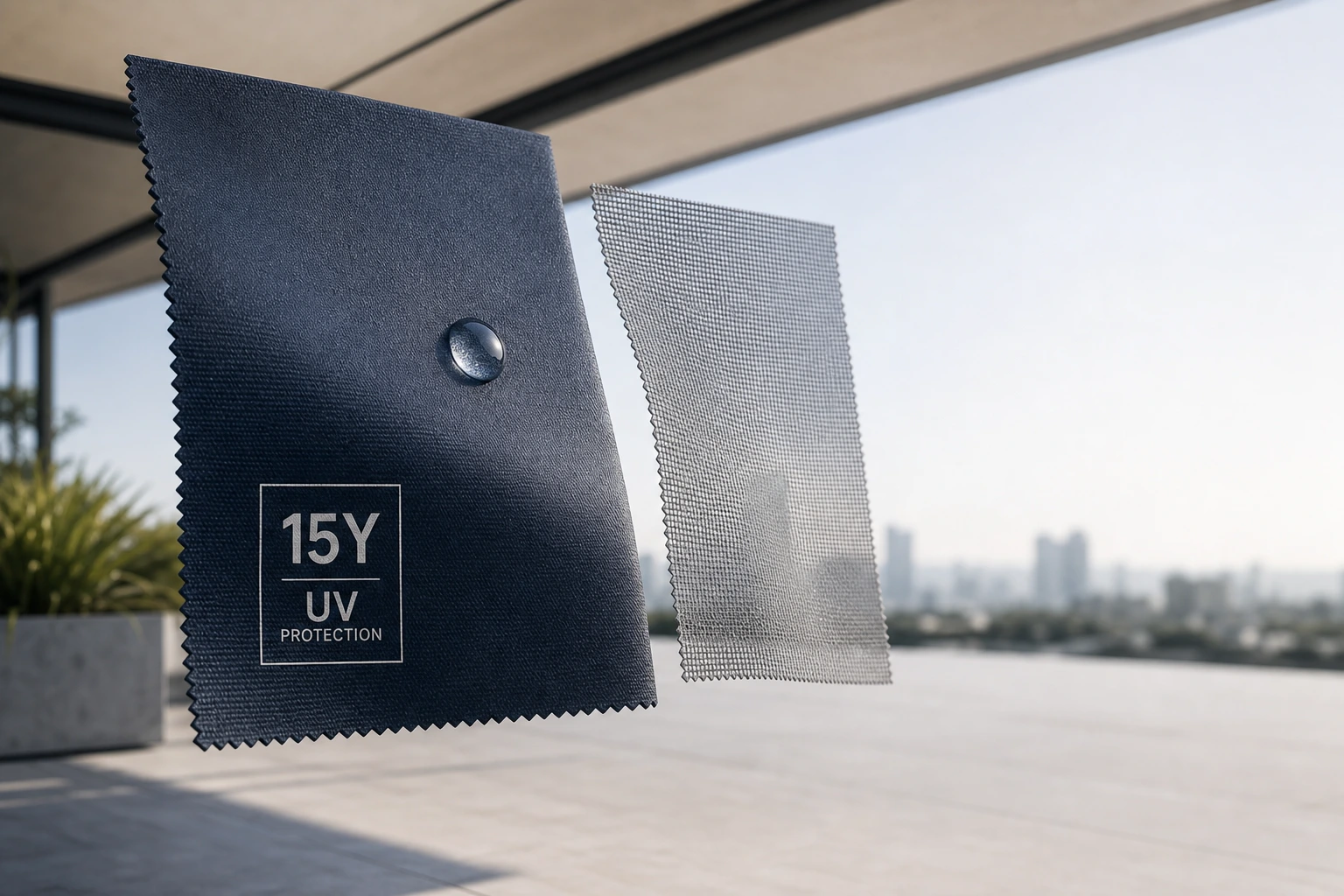
- Premium architectural grade shade fabrics contain 3% to 5% UV stabilizers.
- Public and commercial projects require mandatory NFPA 701 flame retardancy certification rather than standard residential ASTM E84 ratings.
- Premium shade cloth manufacturers offer 100% non-PFAS waterproof variants and warranties that include structural labor costs.
What makes a Coolaroo alternative high quality?
A high-quality commercial alternative to Coolaroo utilizes High-Density Polyethylene with 3% to 5% UV stabilizers to achieve an 8 to 15-year lifespan. Standard commercial-grade shade fabrics contain 2% to 3% UV stabilizers.
The global screen fabrics market is projected to exceed USD 4.5 billion by 2026 as construction projects shift toward high-spec architectural materials (Elite Weaving, 2026). To capture this growth and meet commercial building codes, high-value manufacturers distinguish themselves by securing rigorous certifications like GREENGUARD GOLD and NFPA 701. High-Density Polyethylene (HDPE) remains the preferred choice over polypropylene for permanent tensioned structures due to its superior dimensional stability over time (NMI Fence, 2024).
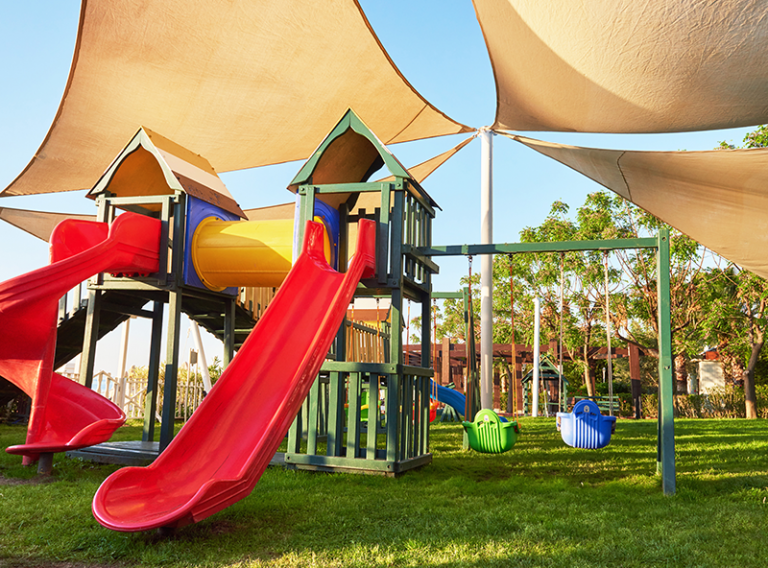
Architectural HDPE designed specifically for schools and municipal projects is engineered to maintain its protective properties far longer than retail mesh. Darker colors provide up to 98% UV protection for playgrounds and seating areas, while lighter colors are utilized specifically for their heat-reflective properties rather than maximum UV blockage (Canopyworx, 2024). Cooltra Shade provides 35 years of manufacturing expertise to ensure these exact commercial specifications meet local municipal codes.
How do retail and commercial shade fabrics compare?
Retail shade products cost less upfront but lack the NFPA 701 fire certifications and labor-inclusive warranties required for commercial permits. Industrial fabrics cost $0.15 to $0.35 per square foot and provide verified dimensional stability for large tensioned structures.
When procuring material for large-scale construction, architectural projects, or municipal spaces, buyers must judge an alternative based on technical compliance. A consumer roll from a retail store cannot safely cover a 500-square-foot public dining area.
| Specification | Retail Shade Brands | Commercial Shade Alternative |
|---|---|---|
| UV Stabilizer Content | 2% to 3% | 3% to 5% |
| Expected Lifespan | 5 to 8 years | 8 to 15 years |
| Flame Retardant (FR) | Often uncertified | NFPA 701 (Mandatory) |
| Waterproof Options | Basic water resistance | 100% non-PFAS waterproof variants |
| Warranty Coverage | Material replacement only | Material plus structural labor costs |
What defines a premium shade cloth manufacturer for waterproof and flame retardant needs?
A premium shade cloth manufacturer provides documented NFPA 701 flame retardancy and emerging non-PFAS waterproof chemistry for public installations. These specialized alternatives ensure building code compliance and environmental safety for massive tensioned structures.
For public spaces and commercial zoning, flame retardancy is a legal requirement. Commercial alternatives must provide specific documentation to satisfy local fire marshals. NFPA 701 serves as the mandatory benchmark for hanging textiles such as shade sails and curtains in public spaces (Senseblinds, 2024). Buyers should be aware that ASTM E84 is intended for rigid building materials and surface burning characteristics, making it incorrect for fabric-only specifications (Global Plastic Sheeting, 2024).
Advanced products are inherently flame-resistant, meeting both NFPA 701 and California Title 19 standards without relying on easily washed-away topical treatments. Furthermore, modern commercial fabrics are actively moving toward non-PFAS formulas for water repellency while maintaining these high fire-resistance ratings (Specialty Fabrics Review, 2025).
How to evaluate if a shade cloth manufacturer is reliable?
A reliable shade cloth manufacturer provides a verified paper trail including NFPA 701 certificates, documented 3% minimum UV stabilizer ratios, and GREENGUARD GOLD emission testing. Evaluating this documentation separates qualified industrial suppliers from residential retail brands.
When determining how to qualify international suppliers, industrial buyers must verify production capability. Look beyond unit price and examine the warranty scope. A major differentiator for premium warranties is the inclusion of labor costs for warrantable claims, which standard retail brands rarely cover (Specialty Fabrics Review, 2025).
Use this verification checklist to evaluate manufacturing reliability:
- Documentation: Does the provider offer a current NFPA 701 certificate for public textiles?
- Stabilizer Content: Is the UV stabilizer content at least 3% to guarantee a lifespan exceeding 8 years?
- Chemical Safety: Does the fabric hold a GREENGUARD GOLD certification for low chemical emissions?
- Warranty Scope: Does the warranty explicitly cover re-installation labor costs if the fabric fails?
Which projects require specialized shade fabric variants?
School playgrounds require 10 to 15-year architectural HDPE with up to 98% UV protection from darker colors. Commercial outdoor spaces rely on lighter colors for thermal control and non-PFAS waterproof coatings for rain protection.
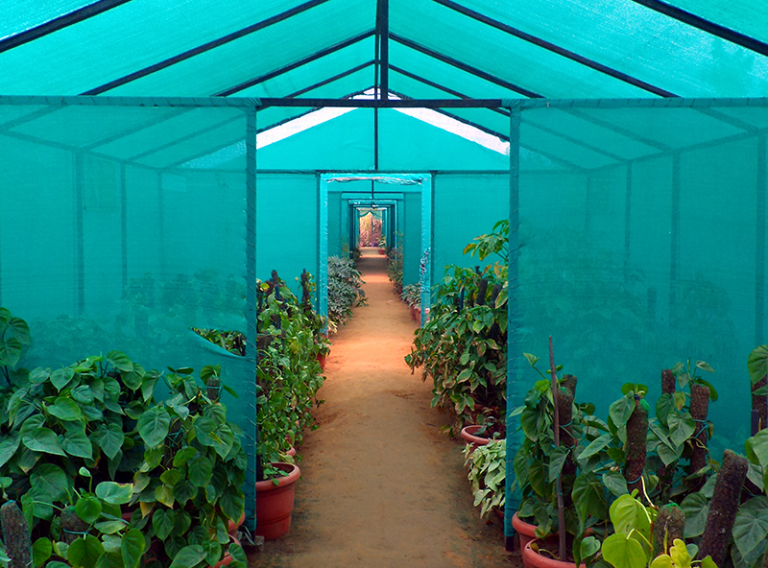
Cooltra Shade analysis shows that project success depends entirely on selecting the correct environmental spec. Standard high-quality HDPE works perfectly for agricultural netting and basic commercial parking structures where simple sun reduction is the goal. However, restaurants, hotels, and event spaces require waterproof options to protect guests from sudden rain, ensuring uninterrupted outdoor seating revenue. Public parks and schools demand strictly verified NFPA 701 flame retardant variants to comply with municipal safety ordinances.
FAQS
Frequently asked questions
What is a high-quality Coolaroo alternative?
A high-quality commercial alternative utilizes High-Density Polyethylene (HDPE) with 3% to 5% UV stabilizers to achieve an 8 to 15-year lifespan. These alternatives offer mandatory NFPA 701 fire certifications and non-PFAS waterproof options for architectural projects that require strict building code compliance.
How much does commercial HDPE shade cloth cost?
Commercial HDPE shade cloth typically ranges from $0.15 to $0.35 per square foot (NMI Fence, 2024). This specific price point balances cost-effectiveness with the necessary dimensional stability required for permanent tensioned systems.
Why is NFPA 701 required instead of ASTM E84?
Fire marshals mandate NFPA 701 specifically for hanging textiles like shade sails and curtains in public spaces (Senseblinds, 2024). ASTM E84 is intended for rigid building materials and surface burning, making it completely irrelevant and non-compliant for flexible fabric installations.
Do premium shade warranties cover labor costs?
Premium commercial warranties frequently cover labor costs for warrantable structural claims (Specialty Fabrics Review, 2025). Retail shade brands typically restrict coverage strictly to material replacement, leaving the buyer responsible for expensive re-installation fees.
Specify commercial-grade shade fabrics for your next project
Get technical documentation, pricing, and project-fit advice from a manufacturer with 35 years of production expertise.